
- تاریخ ارسال: 1404/10/16
- تاریخ بروزرسانی: 1404/11/19
- نویسنده: نادیا یاری فرد
Before Anything Else – Read This Carefully
Adjusting the flame of a jet heater is not a simple tweak. If the burner is dirty, the exhaust path is blocked, or the air-to-fuel ratio is incorrect, the heater will not only lose efficiency but may also pose serious safety risks, including carbon monoxide production, excessive smoke, or even fire hazards.
This guide explains all flame adjustment steps with a strong focus on safety, performance, and maintenance, so you can enjoy reliable heat — not constant concerns.
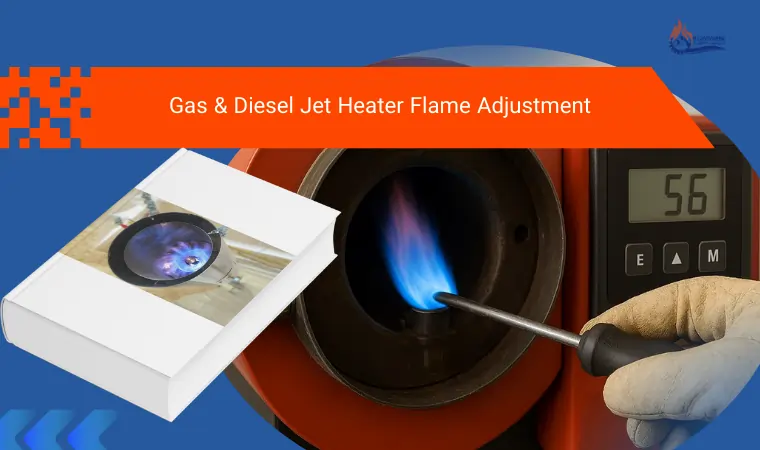
Proper flame adjustment in gas and diesel jet heaters is not just a technical detail — it’s a critical step that ensures safety, fuel efficiency, and consistent heat output. When a jet heater flame is poorly tuned, it can lead to incomplete combustion, excessive smoke, reduced performance, and even dangerous situations such as carbon monoxide buildup or fire hazards. This comprehensive guide walks you through the essential steps to adjust your jet heater’s flame based on fuel type, air-to-fuel ratio, and operational conditions, helping you achieve optimal performance and lower operating costs.
Why Proper Flame Adjustment Matters
Precise jet heater flame adjustment is not only essential for safety, but it also has a direct impact on fuel consumption and equipment lifespan.
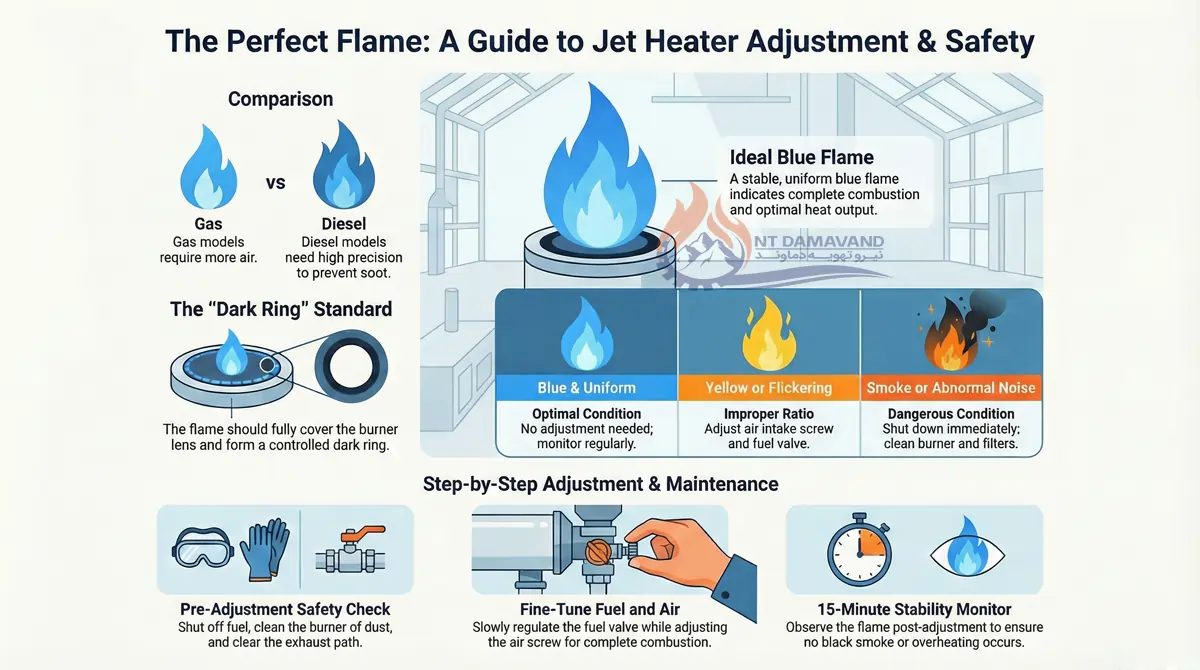
A stable, uniform blue flame indicates complete combustion and optimal heat output, ensuring effective heat distribution inside the facility. Less soot, lower emissions, and stable performance are all results of proper flame tuning.
Many users overlook the fact that flame adjustment must be tailored to the fuel type and environmental conditions:
-
Gas jet heaters (natural gas) usually require more combustion air to achieve a clean blue flame.
-
Diesel jet heaters require higher precision to prevent incomplete combustion and soot buildup.
Gas pressure, chimney/exhaust condition, and ventilation quality are also critical factors affecting flame stability and heater efficiency.
📞 For purchasing a jet heater or getting the latest prices from Niroo Tahvieh Damavand, please contact our experts. 09964355025
Why Is Jet Heater Flame Adjustment So Important?
One of the most critical aspects of jet heater operation and maintenance is proper flame adjustment.
A flame that appears too yellow, produces abnormal noise, or creates excessive smoke not only reduces efficiency but also increases fuel consumption and safety risks.
Benefits of Proper Flame Adjustment
-
Higher thermal efficiency – maximum usable heat output
-
Reduced fuel consumption – prevents unnecessary fuel waste
-
Lower emissions – cleaner combustion and reduced pollutants
-
Longer equipment lifespan – protects internal components from damage
Digital Control Board – Niroo Tahvieh Damavand Jet Heaters
-
The right column displays jet heater operating stages
-
The left column shows fault and error codes
Fuel Type Differences and Their Effect on the Flame 🔥
The type of fuel used in a jet heater (gas or diesel) has a direct impact on flame intensity, color, and adjustment method. Before adjusting the flame, it is essential to correctly identify your heater type.
Gas and diesel jet heaters differ in:
-
Fuel combustion behavior
-
Heat output characteristics
-
Air-to-fuel ratio requirements
Step-by-Step Jet Heater Flame Adjustment Guide
-
Read the User Manual
Always review the manufacturer’s manual for specific adjustment instructions. -
Ensure Safety First
Turn off the heater completely. Make sure the surrounding area is safe and wear protective gloves and safety goggles. -
Access the Control Components
Typically includes:-
Gas/fuel control valve
-
Air adjustment screw
-
Thermostat
-
-
Adjust the Fuel Control Valve
Slowly regulate the amount of fuel reaching the burner. -
Adjust the Air Intake Screw
Fine-tune the air-to-fuel ratio to ensure complete combustion. -
Set the Thermostat
Adjust the desired temperature to control heat output. -
Inspect the Flame
A correctly adjusted flame should be:-
Blue and uniform
-
Free of soot and smoke
-
-
Final Fine-Tuning
Recheck and refine adjustments if needed.
⚠️ Safety Tips During Flame Adjustment
-
Always perform adjustments in a well-ventilated area
-
Use protective gloves and safety glasses
-
If you lack technical experience, contact a qualified technician
🔧 Safety & Maintenance Checklist (Before & After Adjustment)
Before Adjustment
-
Turn off the heater and shut off the fuel supply
-
Inspect the chimney/exhaust system — ensure it is properly ducted and not blocked
-
Clean filters, burner, and combustion chamber from dust and debris
-
Dust can cause incomplete combustion and flame blow-back (source: METI)
-
-
Ensure sufficient ventilation in the area
After Adjustment
-
Observe the flame for 10–15 minutes to ensure stable combustion
-
Check exhaust output — no black smoke should be present
-
Inspect the unit for overheating or abnormal noise
-
Clean and inspect filters and exhaust paths every few months or before the heating season
Key Flame Adjustment Principles
-
Proper Flame:
The flame should fully cover the burner lens and form a controlled dark ring. The front panel should not overheat. -
Incomplete Combustion:
Low flame levels can cause soot and environmental pollution. -
Excessive Flame:
Reduce flame size by adjusting the solenoid valve or gas regulator. -
Increasing Flame Output:
Slowly open the solenoid valve or gas regulator. -
Low Gas Pressure:
Contact after-sales service if pressure issues persist.
📞 For consultation and troubleshooting, please contact our support team. 09964355025
🧰 Maintenance After Flame Adjustment
Proper flame adjustment is not the final step. Regular maintenance significantly extends the heater’s lifespan:
-
Clean filters regularly
-
Inspect fuel and electrical connections
-
Schedule periodic professional servicing
👉 Read more: How to Maintain a Jet Heater Properly
Important Notes
-
Initial adjustments are typically performed by certified technicians
-
Regular cleaning ensures optimal performance
-
Scheduled servicing reduces repair costs and increases durability
FAQ
A correct flame should be stable, blue (for gas models), and without excessive smoke or odor. Yellow or flickering flames indicate improper adjustment.
An overly high flame increases fuel consumption, causes overheating, and may damage the combustion chamber or heat exchanger.
Yes. Gas heaters are adjusted via gas pressure and air intake, while diesel heaters require precise fuel nozzle and air-to-fuel ratio calibration.
Absolutely. Poor flame tuning can lead to incomplete combustion and dangerous carbon monoxide buildup, especially in enclosed spaces.
📞 For professional consultation, call 09964355025 or visit our Contact Us page.
Conclusion
Proper jet heater flame adjustment plays a vital role in energy efficiency, operational safety, and equipment longevity. By following the principles outlined in this guide, you can operate your jet heater with higher efficiency, lower costs, and greater peace of mind.

0 نظر
نظر بدهید